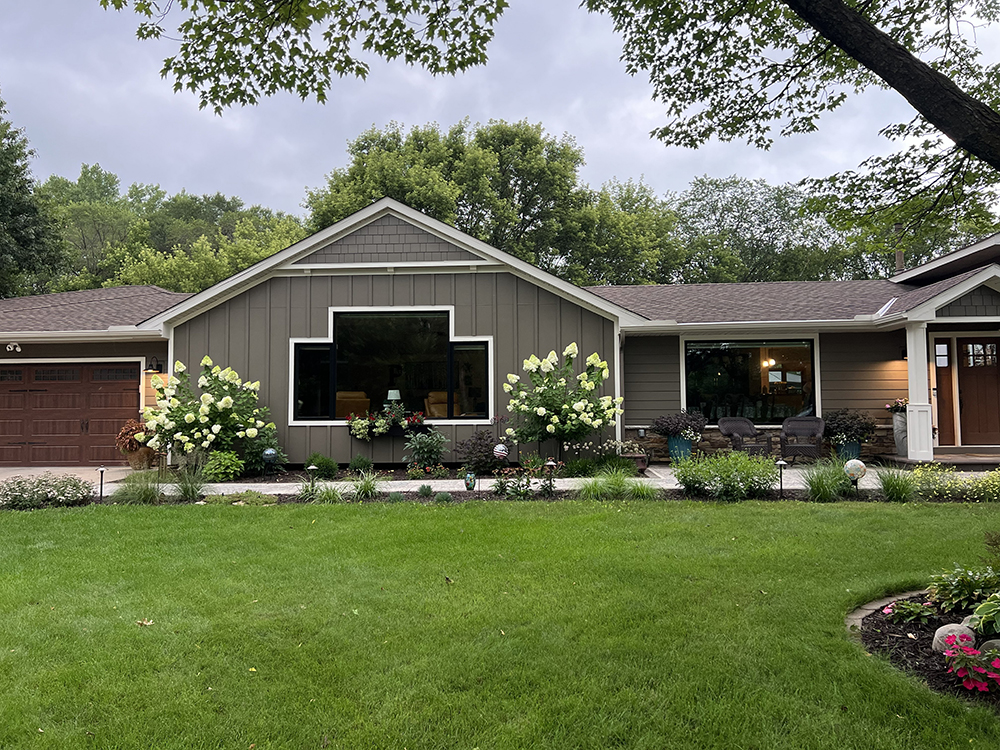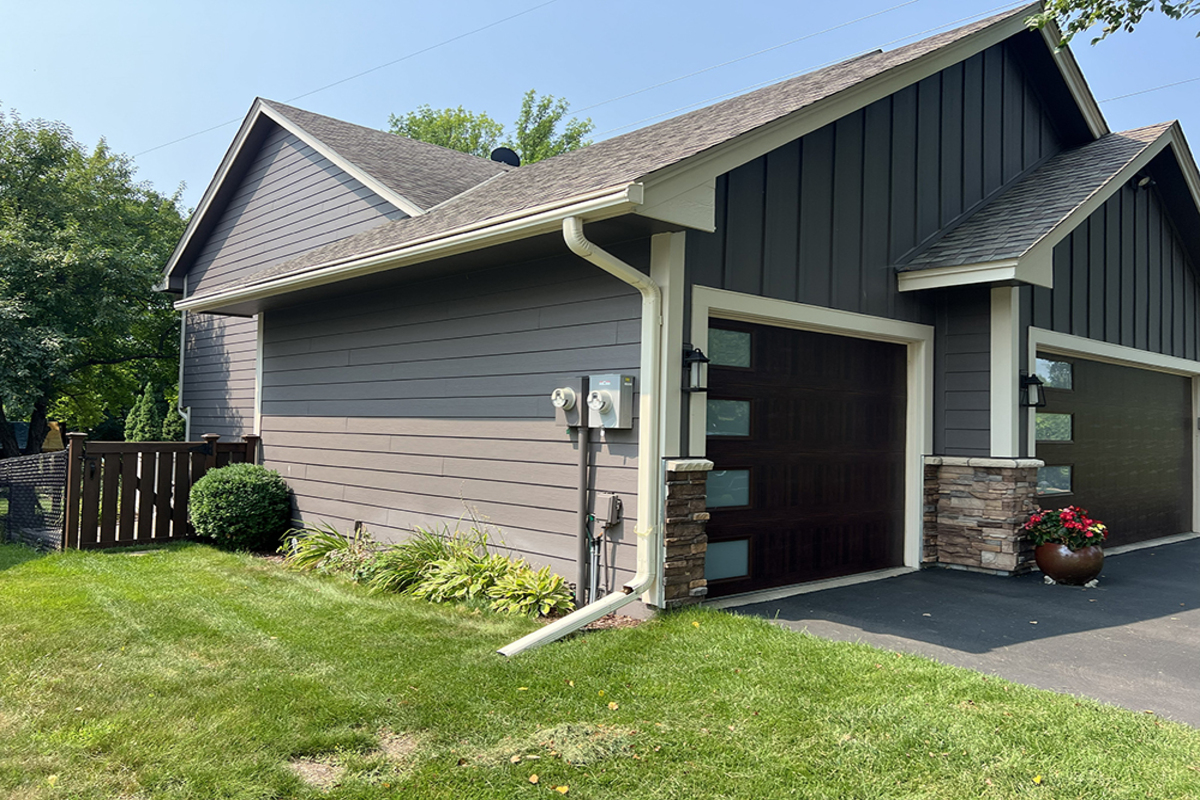
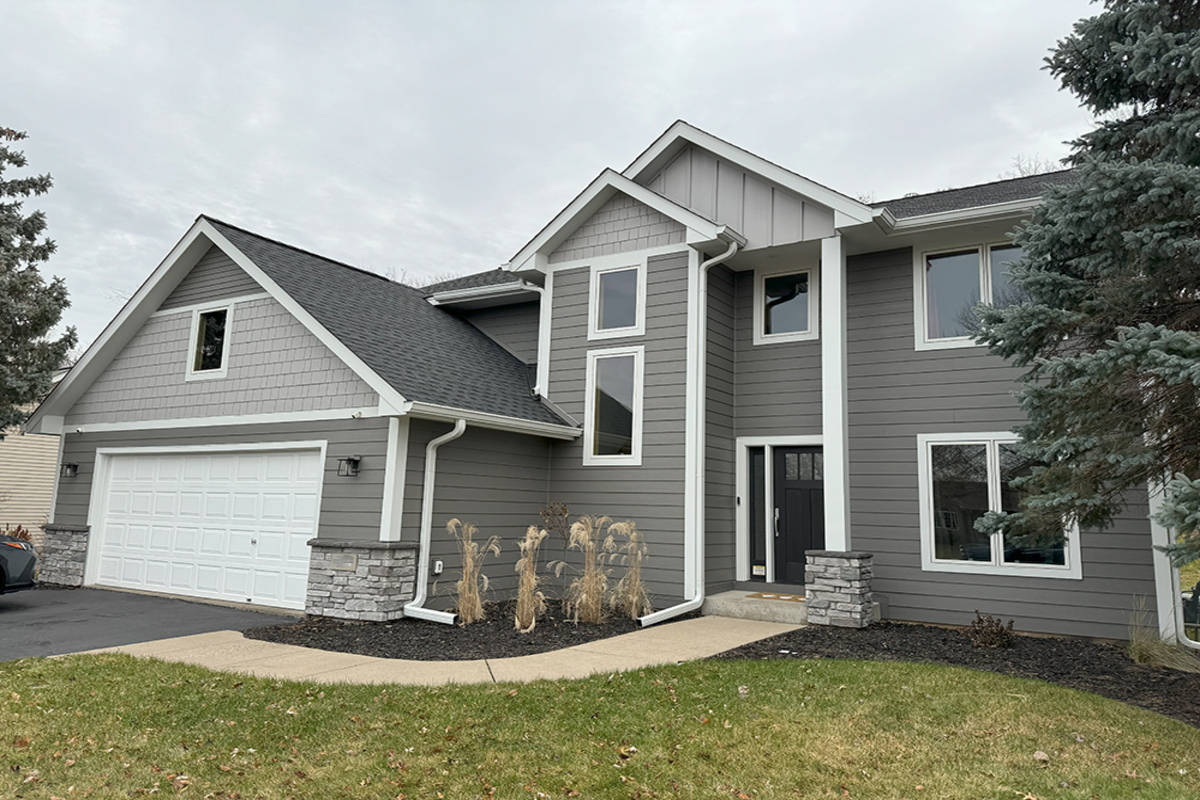
Two-tone siding color combinations give Minnesota homes more depth and curb appeal than a single color. The best results come from two related shades and a clear plan for where each color goes.
Our team has paired James Hardie colors on homes across the Twin Cities for more than 25 years. Below, we cover the combinations we install most, where to place the second color, and the mistakes that make a two-tone exterior look busy.
Quick Answer:
The best two-tone James Hardie exteriors pair a main siding color with a related or contrasting second color on gables, shakes, or board and batten sections. Popular Minnesota pairings include Gray Slate with Pearl Gray, Heathered Moss with Mountain Sage, and Night Gray with Monterey Taupe.
What Counts as a Two-Tone Exterior?
A two-tone exterior uses two siding colors on one home. The second color usually comes with a change in profile, such as lap siding on the main walls and shakes or board and batten in the gables.
Trim is a separate choice. Many homes add a third color, like Arctic White, around windows and corners. For general body, trim, and accent advice, see our post on choosing your James Hardie siding colors.
Where the Second Color Goes
Placement matters as much as the colors themselves. These are the spots that work best on Minnesota homes.
Gables and Peaks
This is the most common choice. A second color in the gables, often paired with shakes, draws the eye up and adds character without overwhelming the house.
Bump-Outs and Entries
A second color on a bump-out or around the front entry highlights the door and porch. It works well on homes with a flat front elevation.
Upper and Lower Levels
Two-story and split-level homes can divide color by floor. This approach breaks up tall or long walls and makes the house feel more grounded.
Pro Tip: Change colors only at a natural break, such as an inside corner or a horizontal band board. A color change in the middle of a flat wall rarely looks intentional. Our guide to James Hardie siding styles covers how to mix profiles cleanly.
Our Favorite Two Tone Siding Color Combinations for Minnesota Homes
Each pairing below comes from a finished Craftsman’s Choice project, so you can see how the colors look on a real house.
Gray Slate and Pearl Gray
Gray Slate lap siding with Pearl Gray board and batten creates a soft study in grays. On this Inver Grove Heights home, Pearl Gray highlights the gable peaks and entry, with Arctic White trim for definition.
Pearl Gray and Iron Gray
A lighter gray body with Iron Gray accents gives a clean, modern look. This Muskego, Wisconsin project uses Pearl Gray lap and shakes with Iron Gray lap accents.
Night Gray and Monterey Taupe
A dark body with warm accents feels rich and welcoming. On this Eden Prairie home, Night Gray lap siding pairs with Monterey Taupe shakes.
Heathered Moss and Mountain Sage
Layered greens blend well with wooded lots and lake properties. On this Chaska home, darker Mountain Sage lap highlights the front bump-out and garage base, and softer Heathered Moss covers the rest of the body and the board-and-batten gable.
Timber Bark and Cobble Stone
Earthy browns create a warm, layered look. This Eden Prairie project combines Timber Bark lap with Cobble Stone shakes and Khaki Brown trim.
Countrylane Red and Night Gray
For a bolder statement, Countrylane Red lap with Night Gray shakes gives a home strong presence. See the result on this Lino Lakes home.
Key Takeaway: The safest pairings share an undertone, such as gray with gray or green with green. Contrasting pairs, like red with charcoal, work best when each color has its own clear section of the house.
Tonal or Contrasting: Which Style Fits Your Home?
Tonal Combinations
Tonal pairings use two shades from the same color family. They look refined, work on almost any home style, and appeal to future buyers.
Contrasting Combinations
Contrasting pairings mix color families, like red and charcoal. They work best on homes with clear architectural sections, so the second color has a defined place to live.
Two-Tone Mistakes to Avoid
Most two-tone problems come from a few common choices:
- Shades that are too close together. The difference reads as a mismatch instead of a design choice.
- Too many colors or profiles. We recommend no more than two siding profiles per side of the house.
- Ignoring the roof. Your shingles are a large part of the color scheme. Our tips on choosing a siding color cover roof pairing in more detail.
- Picking from small chips. A small sample looks very different on a full wall in Minnesota daylight.
Need expert help choosing your siding colors?Contact Craftsman’s Choice for a free design consultation.
Choosing Colors for Minnesota Conditions
Winter Light and Snow
Our long gray winters can make very light colors look washed out. Mid-tones and moderate contrast keep a home looking crisp against snow.
Sun Exposure and Fading
South and west walls take the most sun. James Hardie ColorPlus Technology is factory applied and baked on, which helps colors hold up. Learn more about how ColorPlus resists fading.
Pro Tip: View full-size samples outside on the side of your house at different times of day before you decide.
Frequently Asked Questions
Are two-tone siding color combinations still in style?
Yes. Two-tone exteriors remain popular because they add depth and character, especially when the second color is used on shakes or board and batten.
Should the darker color go on top or bottom?
Either can work. A darker main body with lighter gables keeps a home looking grounded, as on our Inver Grove Heights project. A darker accent in the gables, like the Night Gray shakes on our Lino Lakes project, creates a bolder look.
Find the Right Colors for Your Home
The right pairing can make your home look custom-built. Our team has helped Minnesota and Wisconsin homeowners plan James Hardie exteriors since 1998, and we bring real samples and project examples to every consultation.
Schedule a free design consultation, and we will help you choose two-tone siding color combinations that fit your home and your neighborhood.