

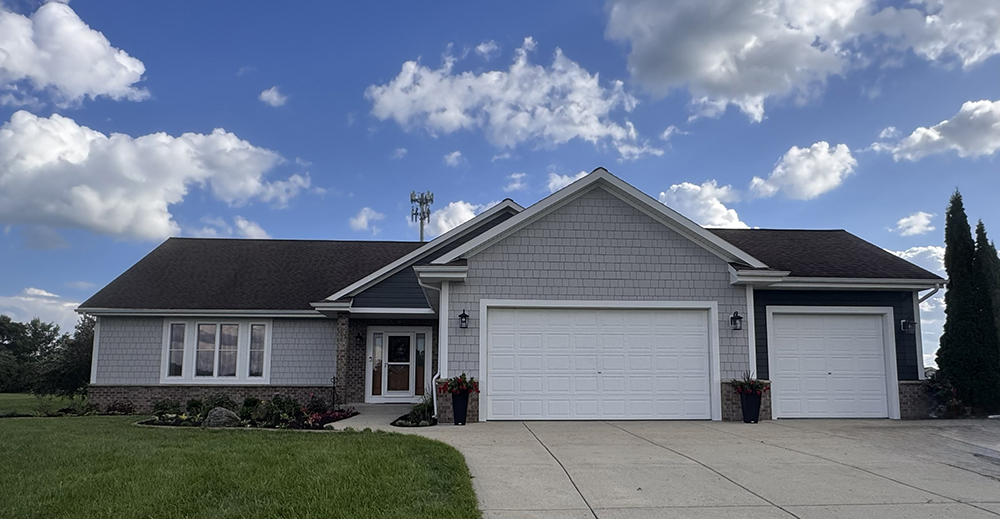
This Muskego, Wisconsin siding replacement transformed a home with faded vinyl siding into a more durable and distinctive exterior. The homeowners wanted to move away from plastic siding while updating the look of their home and bringing more attention to its existing architectural details. Craftsman’s Choice removed the old vinyl and installed James Hardie fiber cement siding in Pearl Gray and Iron Gray, combining lap siding and shake accents to add contrast, texture, and dimension.
Project Specs
Location: Muskego, Wisconsin
Home Style: Single-story home with multiple front-facing gables
Problem: Faded vinyl siding that was no longer providing the appearance or long-term performance the homeowners wanted
Solution: Remove the existing vinyl siding and replace it with a combination of James Hardie lap siding and straight-edge shakes
Colors: James Hardie Pearl Gray and Iron Gray
- Design Approach: Pearl Gray as the primary color with Iron Gray strategically placed to emphasize architectural sections of the home
Result: A more durable exterior with added contrast, texture, and architectural definition
Certifications: James Hardie Elite Preferred Contractor
Project Overview
The original exterior of this Muskego home was covered primarily in beige vinyl siding. While the home already had several interesting architectural features, including multiple gables, brick accents, and varying wall sections, the single siding color caused many of those details to blend together.
The homeowners wanted more than a color change. They were ready to move away from faded plastic siding and replace it with an exterior that offered a more substantial appearance and was better suited to the demands of Wisconsin weather. After removing the existing vinyl siding, the home was prepared for its new James Hardie fiber cement exterior.

Rather than covering the entire house with one color and profile, the new design uses Pearl Gray and Iron Gray in specific areas to bring out the home’s existing architecture. Pearl Gray lap siding provides the primary exterior color and complements the existing brick, white trim, and roof without overwhelming them.
Pearl Gray straight-edge shakes were added to prominent sections of the front elevation. Keeping the shakes the same color as the primary lap siding introduces a noticeable change in texture without adding another color to an already detailed façade.
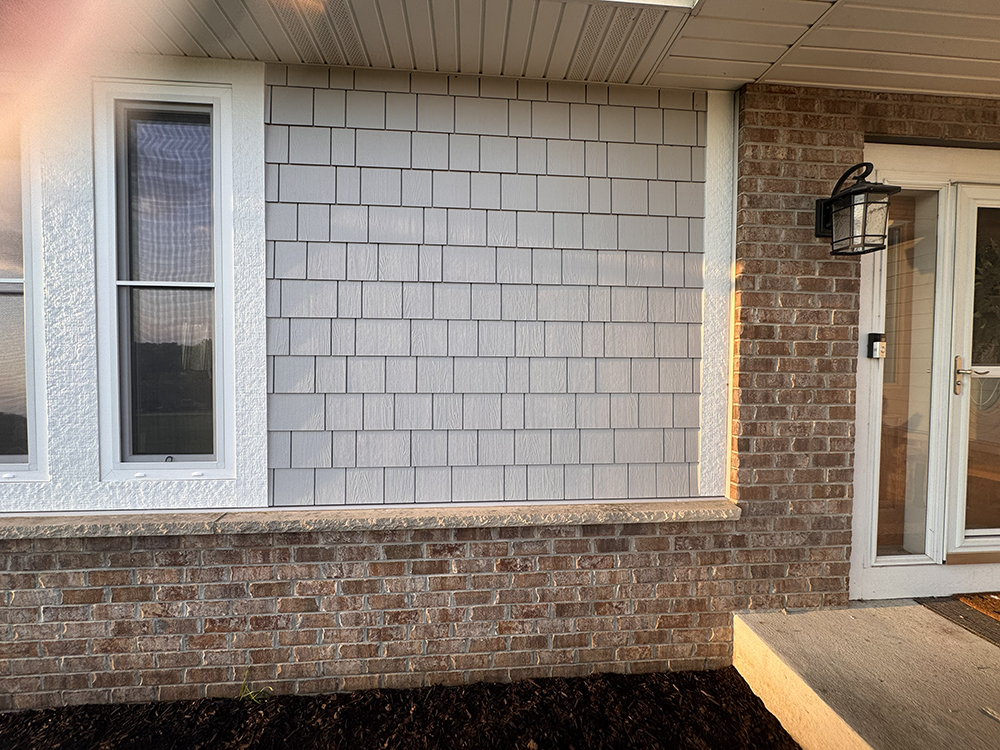
One of the most effective details on this project is that the additional visual interest comes from two colors and two siding profiles rather than major architectural changes. The rooflines, brick, windows, and overall character of the home remain familiar, but the new siding makes those existing features much more noticeable.
“Knowing the products as well as I do gave me high expectations. The installation exceeded them.”
— Muskego Homeowner
This project uses Pearl Gray as the primary siding color with Iron Gray as an accent. On another New Berlin James Hardie project, we used the same two colors in a very different way, with Iron Gray lap siding as the primary color and Pearl Gray board and batten in the gables.
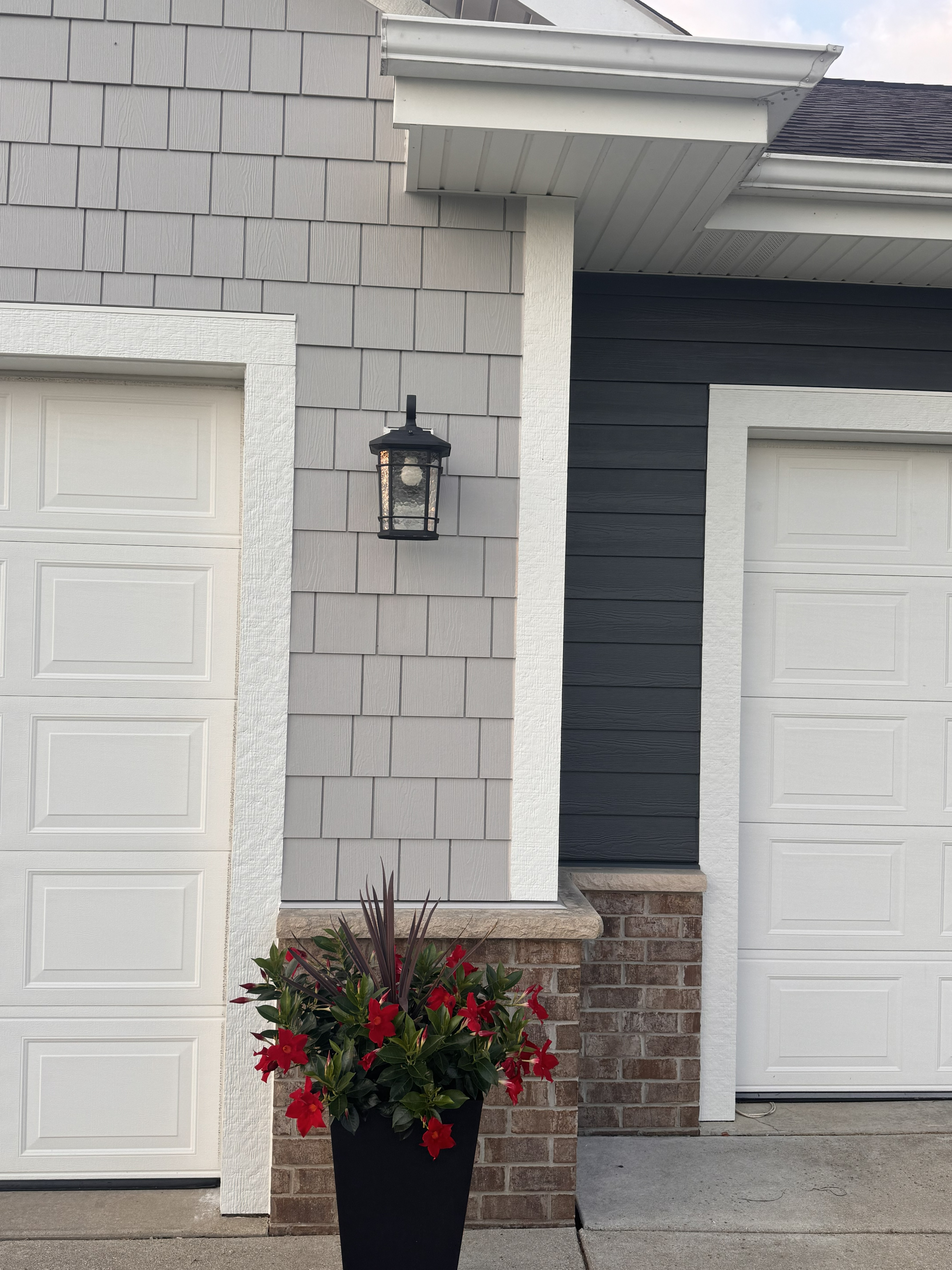
Iron Gray lap siding provides the contrast. Instead of using the darker color throughout the exterior, it was placed selectively around the entry, garage, and gable sections. These darker areas help visually separate different portions of the home and make the lighter Pearl Gray siding stand out.
The finished Muskego exterior accomplishes what the homeowners were looking for: the faded vinyl is gone, the home’s architecture has more definition, and the combination of Pearl Gray lap siding, Pearl Gray shakes, and Iron Gray accents gives the house a more substantial and intentional appearance.
What the Homeowner Said
This homeowner brought a unique perspective to the project. As a James Hardie employee, she already knew the siding product she wanted. But when it came to choosing colors, visualizing the finished exterior, and trusting someone to install it on her own home, she faced many of the same decisions as any homeowner.
Muskego Homeowner
“One of the biggest things I was worried about was the color. I wanted gray but the roof was brown and I didn’t know how to blend the two. Looking at samples is one thing, but trying to picture your entire home is another.
Mark was a huge help. Plus the Hover visualization tool made such a difference. Being able to see different color combinations on our actual house gave me the confidence to move forward, and I honestly couldn’t be happier with how it turned out. It’s even better than I imagined.
I can honestly say that the work was impeccable. They paid attention to every detail, communicated well, kept the job site clean, and took real pride in what they were doing.
Knowing the products as well as I do gave me high expectations, and I can honestly say the installation exceeded them. As a homeowner, that’s the part that matters most.”
FAQs
The existing vinyl siding had faded over time and was no longer giving the homeowners the appearance or performance they wanted. They were also ready to move away from plastic siding and chose James Hardie fiber cement for a more substantial exterior that could better handle Wisconsin’s changing weather conditions.
Yes. Using more than one siding color can help define different architectural sections of a home when the transitions are planned carefully. On this Muskego project, Pearl Gray serves as the primary color while Iron Gray was used selectively around the entry, garage, and gable areas to create contrast and depth.
Yes. Combining siding profiles is a way to add architectural detail without relying on additional colors. Here, Pearl Gray lap siding covers much of the home while Pearl Gray straight-edge shakes highlight prominent areas of the front elevation. Using the same color for both profiles keeps the design cohesive while still adding texture.
Yes. Existing brick does not necessarily need to be removed when replacing siding. On this home, the original brick was retained and became part of the new exterior design. Pearl Gray provides a neutral transition alongside the brick, while Iron Gray adds darker contrast in selected areas.
James Hardie fiber cement siding is an option for Wisconsin homeowners who want an alternative to vinyl siding. Fiber cement does not rely on a thin plastic exterior and is engineered for long-term exposure to weather. Proper wall preparation, flashing, moisture management, and installation are also important parts of how the complete siding system performs.
No. Color, siding profile, and accent placement can all be worked through as part of the design process. Craftsman’s Choice can create renderings of your home with different siding colors and design options, allowing you to compare ideas before making final selections.
This Muskego project is a good example. Rather than simply replacing the beige vinyl with one new color, Pearl Gray lap siding, Pearl Gray shakes, and Iron Gray accents were used together to bring more definition to the home’s existing architecture. Seeing different combinations on your own home can make it much easier to choose a design with confidence.
Glossary
- Housewrap: A protective layer installed over the home’s wall sheathing and behind the finished siding to help manage water and air movement through the exterior wall system. The installation photos from this Muskego project show the housewrap before the new James Hardie siding was installed.
- Siding Replacement: The process of removing an existing exterior siding material and installing a new siding system. A complete siding replacement can also provide an opportunity to inspect the condition of the wall beneath the old siding before the new exterior is installed.
- Wall Sheathing:The structural panels attached to the home’s framing beneath the housewrap and siding. Because sheathing is normally concealed, moisture damage or deterioration may not be discovered until the existing siding is removed. Craftsman’s Choice has in-house carpentry capabilities to address moisture-related damage and replace deteriorated wall sheathing when necessary, without requiring the homeowner to hire a separate contractor.
- Fiber Cement vs. Vinyl Siding: A common comparison homeowners make when researching replacement siding. Vinyl is a plastic-based siding product, while fiber cement is a different product category made primarily from cement, sand and cellulose fibers. The homeowners on this Muskego project chose James Hardie fiber cement to replace their existing vinyl siding.
- Siding Color Visualizer: A digital design tool or rendering that allows homeowners to see different siding colors and combinations on an image or model of their own home before making final selections. This is particularly useful when considering multiple colors or siding styles, like the Pearl Gray and Iron Gray combination used on this project. James Hardie itself currently encourages homeowners to visualize colors and profiles on their homes before selecting a design.
- Wisconsin Climate and Siding: Wisconsin homes experience moisture, snow, freezing temperatures and repeated seasonal temperature changes. Those conditions make material selection, moisture management and proper installation important considerations when choosing replacement siding. James Hardie markets its HZ5 products specifically for climates with wet and freezing conditions.