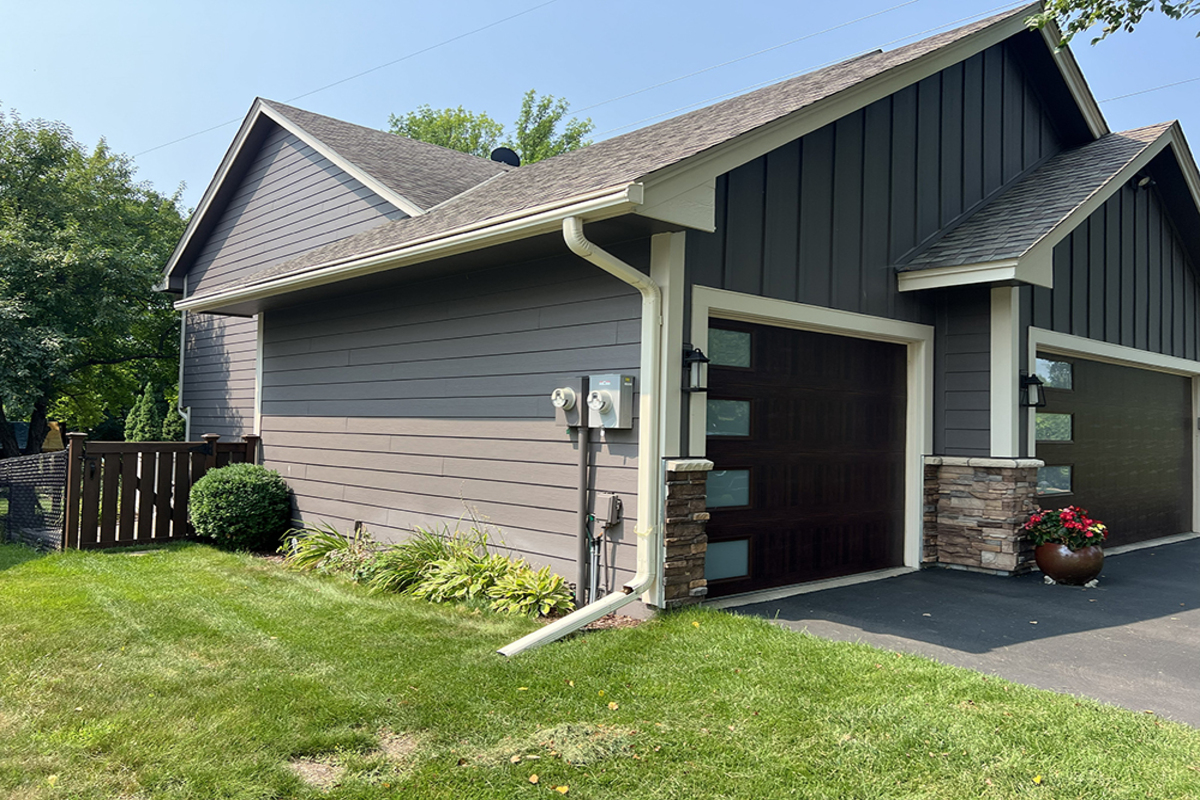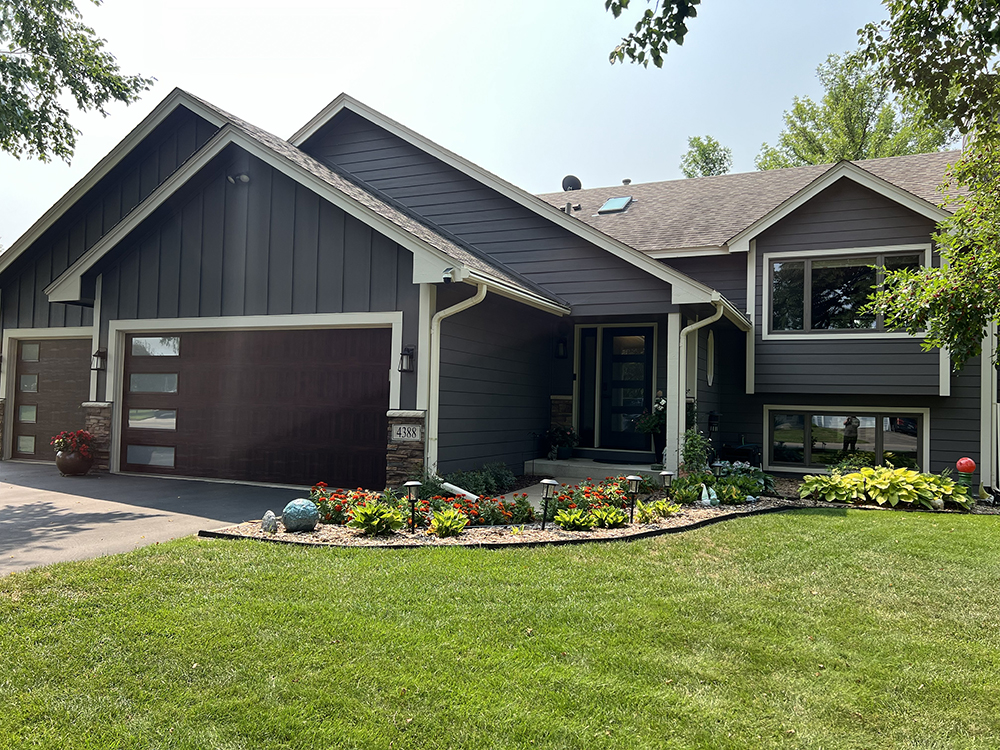
Storm cycles test every part of a home. High winds push rain into weak spots, and freeze-thaw cycles force moisture into seams. Many homeowners ask what siding holds up best when the weather turns harsh. We recommend board and batten siding because it creates fewer exposed joints and a tighter seal.
How It Handles Storms
How Board and Batten Siding Limits Moisture
The system starts with wide 4×10 panels. Those panels meet at vertical joints that we cover with batten strips. This creates fewer seams across the wall. Fewer seams mean fewer paths for wind-driven rain to reach the substrate. The battens act like protective caps at every joint, helping keep moisture on the exterior surface where it can drain.
Key Takeaway: Fewer seams reduce moisture exposure. Batten strips shield panel joints. The wall behaves like a continuous, water-shedding layer.
Why a Solid Layer Improves Durability
Once the panels are fastened and the battens are set, you get a solid layer of siding. This continuous surface distributes wind pressure and reduces flutter. It helps the wall resist impact and movement during gusty weather. The result is a stable cladding that holds its shape and keeps joints closed.
- Continuous surface resists wind lift.
- Stable joints reduce cracking at seams.
- Cleaner lines make seasonal cleaning easier.
Installation That Holds Up in Harsh Weather
Proper Nailing Pattern into Studs
The panels are heavier than standard lap products, so fastening matters. Each 4×10 sheet needs a specific number of nails so it stays secure. Every nail must land in studs, not just sheathing. Fasteners into studs give the panel real bite, which helps the wall stand up to wind and seasonal movement.
Pro Tip: Ask your contractor to confirm stud layout before panel install. Verify nail counts per panel and spot-check that nails hit framing.
Battens that Lock Joints
After the panels are set, battens go over every joint. We place fasteners through the batten into studs where possible. This locks the joint line, adds another layer over the seam, and helps prevent water entry during driving rain.
Checklist to review on install day:
- Stud locations snapped and marked on the wall.
- Panel edges aligned over framing for solid nail placement.
- Nail counts per panel are verified as work progresses.
- Battens seated tight with even reveals.
Need expert help with a siding project in tough weather zones. Contact Craftsman’s Choice for a free consultation.
Weather Performance You Can See
Fewer Problem Areas to Maintain
With fewer seams, there are fewer places to monitor after storms. You still want to check joint lines and the bottom edges. Most seasonal touch-ups focus on simple cleaning rather than patching lots of small joints.
Key Takeaway: Less joint complexity means simpler inspections. You spend more time rinsing surfaces and less time chasing leaks.
Fits a Range of Elevations
Tall walls and complex corners benefit from large panels. The big sheets reduce the number of horizontal breaks, so water has fewer edges to catch. Batten placement stays consistent from grade to eave, which keeps joints neat and predictable.
FAQ-Style Details
What Makes this System Durable in Storms?
The strength comes from three points working together. Large 4×10 panels, proper nailing into studs, and battens that cover every joint. That combination builds a solid, stable layer that sheds water and resists wind.
Do I Need Special Fasteners?
Use nails rated for exterior siding and long enough to penetrate framing. The goal is to consistently hold in studs so the heavier panels stay put over time.
Is Board and Batten Siding Right for my Home?
If you want fewer seams and a solid panel layer with protected joints, board and batten siding is a strong choice for harsh weather regions.
Build a Stronger Wall System with Craftsman’s Choice
Ready for a siding upgrade that holds up when storms hit. Schedule your free quote with Craftsman’s Choice. Our team will plan stud-based fastening, set clean batten lines, and deliver a solid, moisture-resistant wall that lasts.