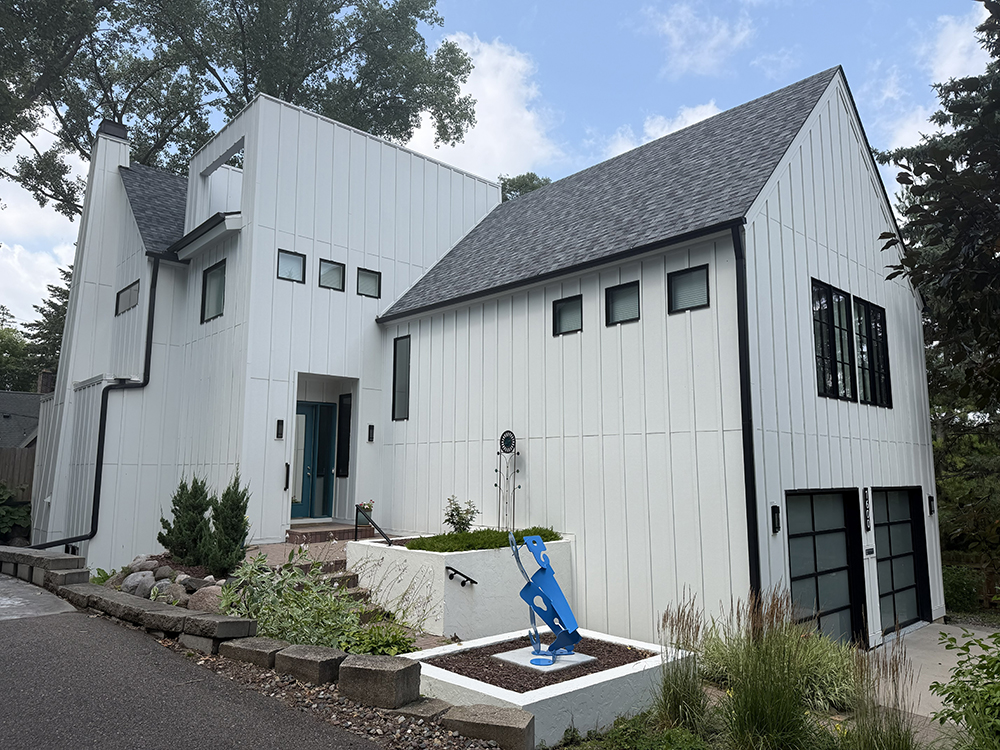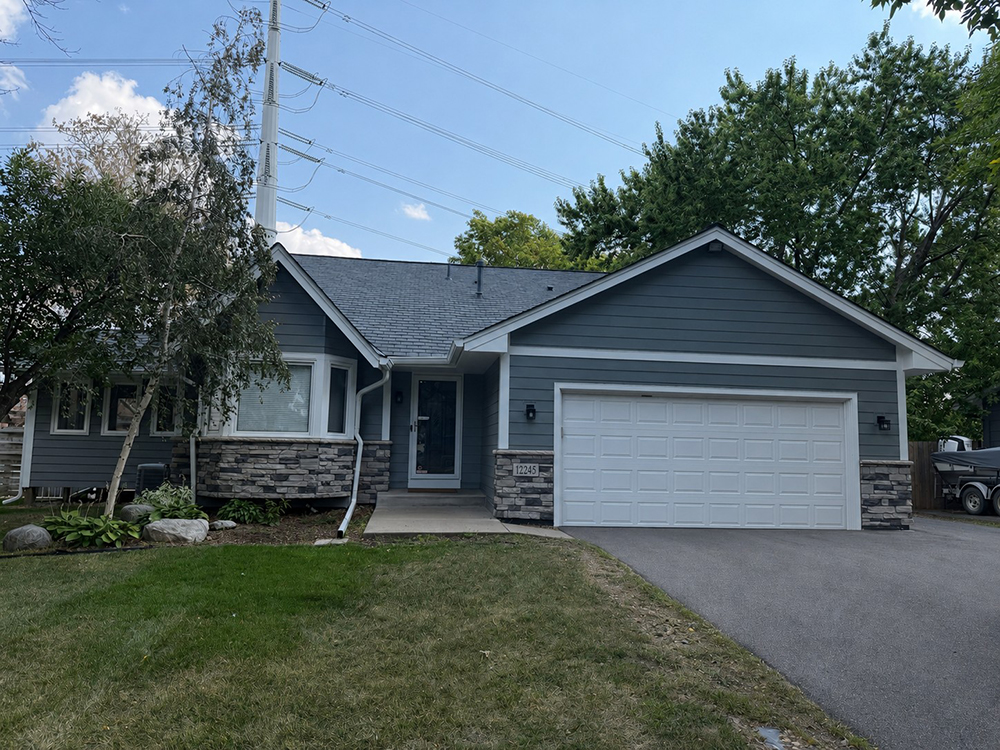
Siding problems in the Twin Cities rarely show up in July. They surface in February, on a north-facing wall, after a winter’s worth of freeze-thaw cycles. James Hardie HZ5 is the formulation built specifically for that problem, and it is what gets specified on homes across this region. We have been installing Hardie siding on metro homes since 2000. Here is what the board does, what it does not do, and where these projects actually go wrong.
Why Minnesota Homes Get James Hardie HZ5
James Hardie divides North America into ten climate zones based on eight variables including snow, temperature range, humidity, and UV exposure. Zones 1 through 5 receive the HZ5 product line. Zones 6 through 10 receive HZ10.
All of Minnesota sits in HZ5 territory. Wisconsin does too.
Three Things James Hardie HZ5 is Engineered to Handle
James Hardie makes three specific claims about this line:
- A surface engineered for paint adhesion. Finishes hold longer through cold-weather expansion and contraction.
- Improved moisture resistance at the board surface. Less water absorbed means less water to freeze and expand.
- An integrated drip edge on lap siding that moves water off the board instead of behind it.
Some sites claim HZ5 uses a denser composition. James Hardie makes no such claim. The difference is surface engineering and water management.
How to Confirm You are Getting the Right Board
A finished wall gives no way to tell HZ5 from HZ10 by eye, and no board can be converted after manufacturing. The formulation is set when the board leaves the plant, so verification is a pre-installation question.
Pro Tip: Before installation day, ask your contractor to show you the product stamp on the board and name the distributor. Distributors serving this region carry HZ5, so confirming the source protects you on any bid.
Four Things Minnesota Conditions Do to Siding
Freeze-Thaw Cycling
Temperatures here cross above and below freezing repeatedly through a single winter. Water absorbed into a cementitious board expands as it freezes. Repeat that on a product not engineered for it, and you get hairline cracking at butt joints and fastener heads.
Ice Dams and Meltwater
Ice damming forces water into places the wall assembly was never built to handle. The HZ5 drip edge helps, but clearance detailing at roof and deck intersections does the heavy lifting.
The Full Temperature Range
Minnesota homes swing from well below zero in winter to summer heat and humidity. Fiber cement holds its dimensions through that range. Vinyl expands, contracts, and eventually waves.
Hail, Woodpeckers, and Radiant Melt
Summer storms put siding through impact no showroom sample prepares you for. Fiber cement absorbs it better than vinyl, which cracks in cold and punctures in heat.
Wooded lots can also see woodpecker damage on softer materials. Hardie board is noncombustible with a Class A fire rating and gives pests nothing to chew. We have replaced plenty of vinyl distorted by heat reflected off low-E windows.
Key Takeaway: The board formulation solves the material problem. It does not solve the water management problem. That part belongs to your installer.
Where HZ5 Projects Fail in Minnesota
In our experience, Hardie problems here trace back to installation far more often than to the product.
Clearance and Flashing Mistakes
James Hardie publishes minimum clearances to roofing, decking, and grade. Those specs exist because trapped moisture has nowhere to drain. Common misses:
- Siding run tight to roofing or decking instead of holding the published clearance
- Not enough clearance held above finished grade
- Missing kickout flashing at roof-to-wall intersections, a frequent hidden water path
Butt Joints and Fasteners
Butt joints that rely on sealant alone tend to fail first here. Proper joint detailing keeps the wall from depending on caulk. Overdriven nails are the other repeat offender, since a crushed board face becomes an entry point for water.
Cold Weather Installation
Winter installs are fine when the crew adjusts: dry board storage, sealants kept within their temperature range, and cut stations set up correctly. Crews that work the same way in January as they do in June create the callbacks.
Need expert help with a James Hardie siding project? Contact Craftsman’s Choice for a free consultation. We will walk your home, review the scope, and give you a clear written quote.
HZ5 Compared to Your Other Options
HZ5 vs HZ10
HZ10 is engineered for hurricane-force wind, salt air, and humid heat. On a Minneapolis home those attributes go unused, and you give up the cold-climate surface engineering you need.
Key Takeaway: The right Hardie product for Minnesota is the one engineered for cold, not for coastal storms.
HZ5 vs Vinyl and Engineered Wood
| Factor | HZ5 Fiber Cement | Vinyl | Engineered Wood |
| Longevity in MN | Longest | Shortest | Middle |
| Fire rating | Class A noncombustible | Combustible | Combustible |
| Hail and impact | Strong | Poor | Moderate |
| Woodpecker resistance | Excellent | Poor | Moderate |
| Installed cost | Highest | Lowest | Middle |
Engineered wood has honest advantages. It is lighter, cuts faster, and costs less. For homeowners who want to make one siding decision and be done, fiber cement is what we recommend.
Hardie Siding Texture Differences to Consider
Cedarmill and Smooth
Cedar mill carries a woodgrain finish and remains a popular choice here, since it reads as traditional lap siding from the curb. Smooth gives a flatter, cleaner face that suits modern and transitional exteriors.
How Texture Affects Upkeep
Deeper grain holds more dust and pollen, which shows sooner on light colors. Smooth board rinses cleaner but shows surface imperfections more readily. Both carry identical HZ5 performance, so the choice is appearance, not durability.
Project Cost and Warranty Coverage
What Drives Your Project Cost
Hardie is a premium product, and no two quotes look alike. Rather than chase an online average, focus on what drives your number:
- Home height and number of stories
- Tear-off and any sheathing repair found underneath
- Trim complexity, including board and batten, shakes, and accent details
- ColorPlus factory finish versus primed board painted on site
What the Warranty Actually Covers
James Hardie publishes two separate coverages:
- A 30-year limited, transferable, non-prorated warranty on the substrate
- A 15-year warranty on the ColorPlus finish
Terms can change, so confirm current coverage in writing before you sign. Both of those cover the product. Neither covers the installation. Clearance and fastening violations can put coverage at risk, which is why our Elite Preferred status and workmanship warranty matter as much as the board.
Pro Tip: Ask every bidder for a line-item quote covering siding, trim, fascia, housewrap, flashing, and caulking. Vague lump-sum bids hide the details that determine how long your siding actually lasts. Our contractor question checklist covers what else to ask.
Ready to Talk About Your Home?
Minnesota weather punishes shortcuts. The right product paired with correct detailing is what keeps a wall dry decade after decade.
Our team has completed thousands of Twin Cities siding projects since 1998. Reach out for a free consultation, and we will show you photos of comparable homes, walk through color and texture options, and price the work honestly. Call us to schedule your estimate and see whether James Hardie HZ5 is the right fit for your home.