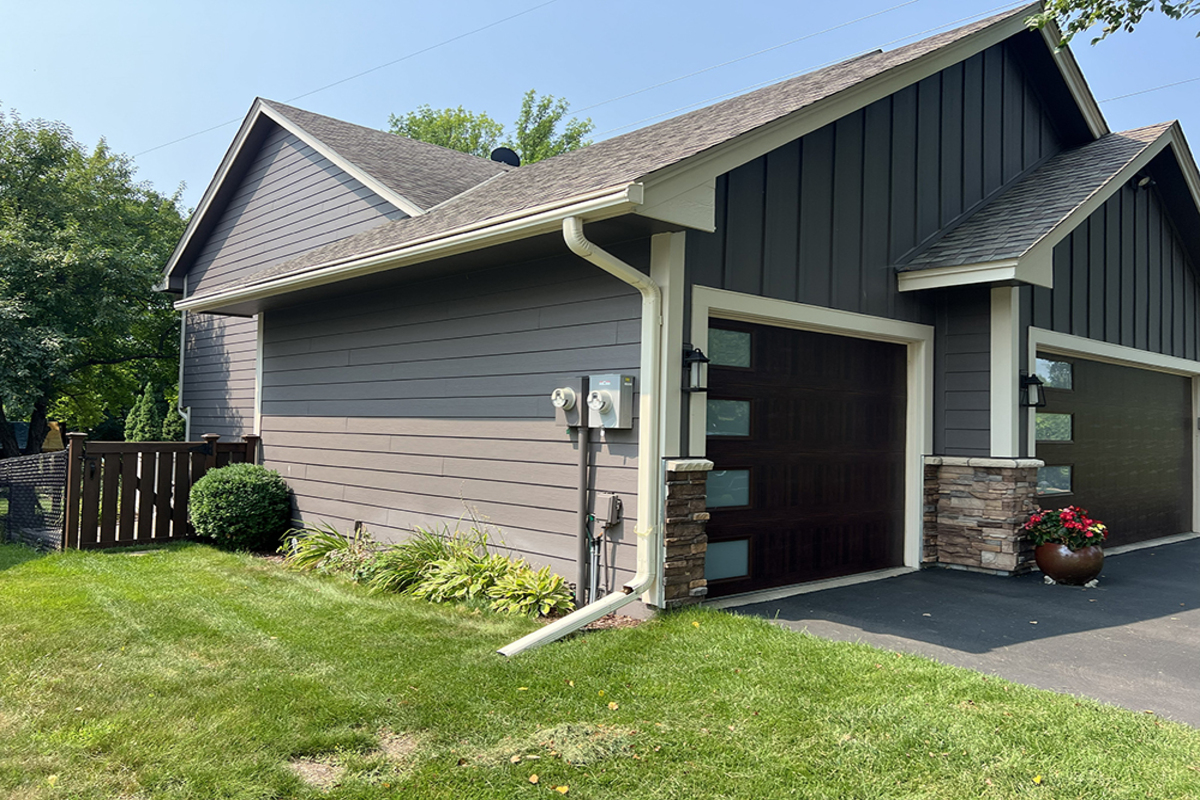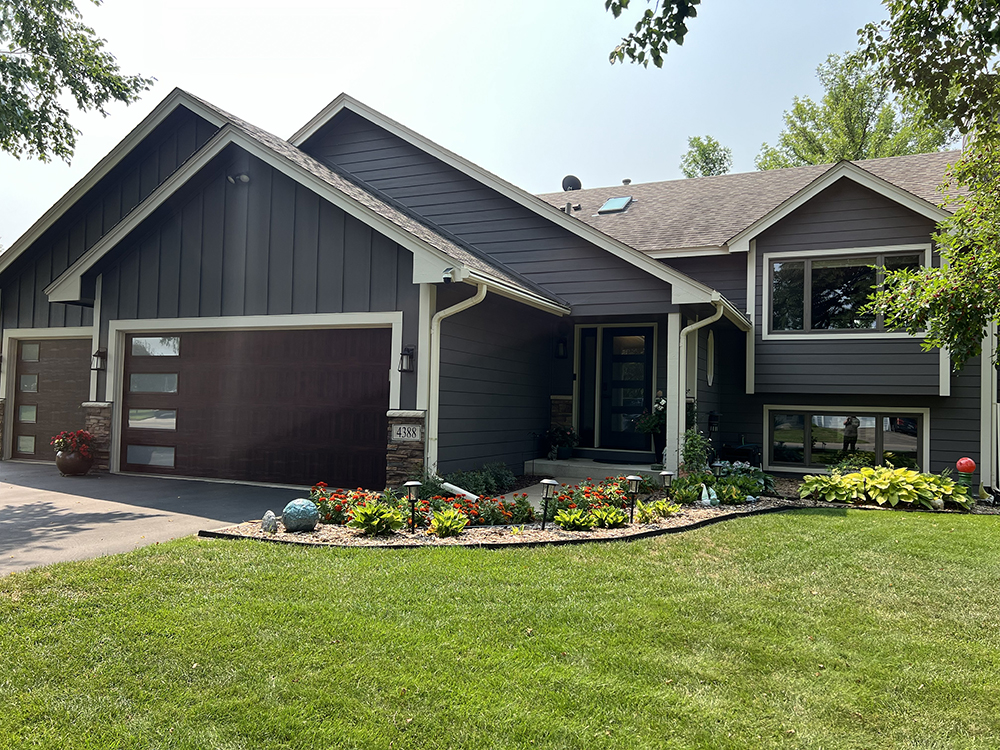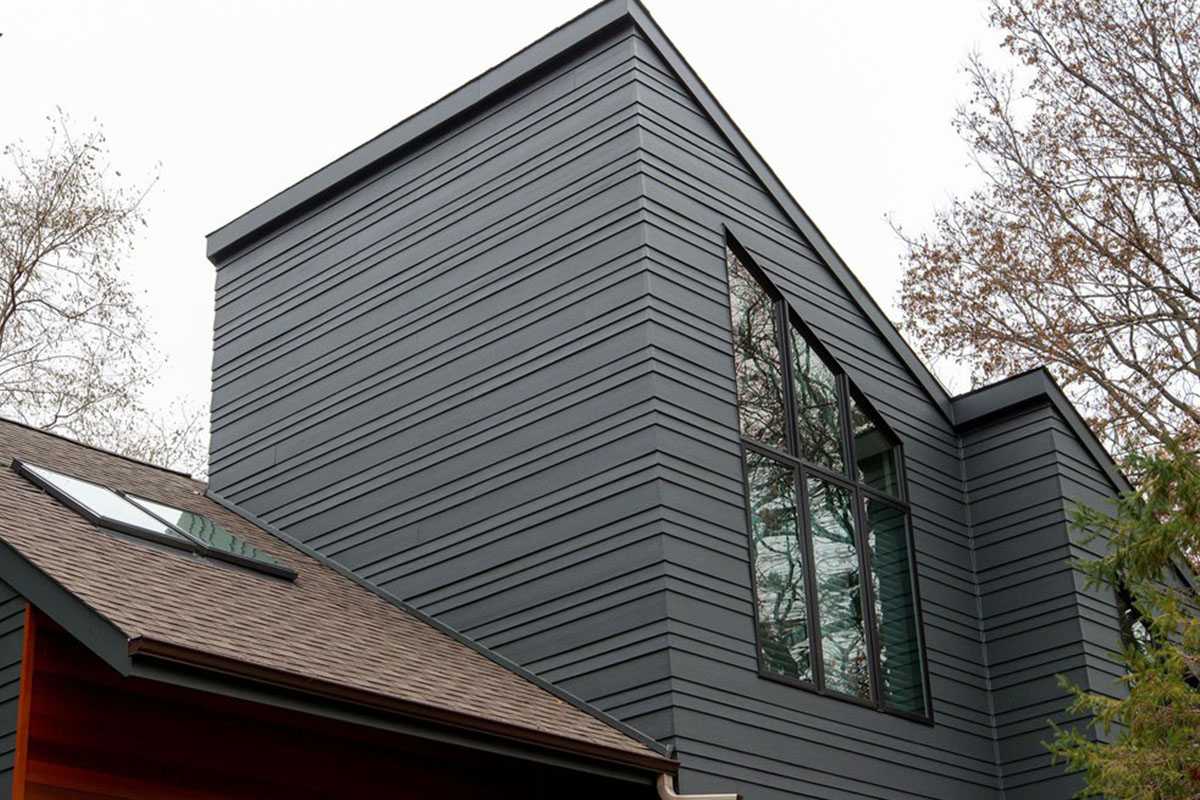
A James Hardie siding replacement improves efficiency by sealing gaps and reducing air leaks. The siding works with house wrap and caulking to form a tight barrier that helps insulation perform better. This creates steadier indoor temperatures, fewer drafts, and noticeable energy savings year-round.
How a James Hardie Siding Replacement Improves a Drafty Home
Why “Tight” Beats “Thick”
James Hardie fiber cement does not add much R-value. The gain comes from a continuous, well-sealed cladding system that blocks wind from reaching wall cavities. When air moves across insulation, its effectiveness drops quickly. Stop the air movement, and the insulation you already own works closer to its rated value.
Key Takeaway: Stopping air movement is often more impactful than adding thickness to the wall. A tight exterior lets existing insulation perform as designed.
Installed Without Gaps for a Cleaner Seal
Compared to some vinyl systems, we install Hardie panels and trim without loose J-channel finning or exposed gaps. Joints are set, edges are caulk-tight, and penetrations are detailed, so wind has fewer paths into the wall.
- Fewer open seams around windows and doors
- Caulked transitions that stay flexible and sealed
- Trim details that eliminate common leak points
What House Wrap Actually Does for Energy Use
House Wrap Maximizes Insulation Efficiency
After we remove old siding, we install house wrap across the sheathing. House wrap does not add insulation value. It limits wind from reaching the insulation, similar to how still air between panes helps a double-insulated window resist heat flow. If the air inside that space moves, performance drops. If the air is still, performance improves.
Pro Tip: Ask your estimator where the house wrap laps, how corners get taped, and how window flanges are integrated. Clean overlaps and taped seams are the difference between “covered” and “sealed.”
Prevents Moving Air from Reducing Effectiveness
Even small wind paths across fiberglass or cellulose can reduce real-world performance. By wrapping and sealing the wall plane, we reduce that air movement. The result is a tighter building envelope that supports steadier indoor temperatures with the same HVAC settings.
Need expert help with a siding replacement? Contact Craftsman’s Choice for a free consultation. We will evaluate your current leaks, explain the wrap and sealing plan, and show you how details at windows and corners drive real results.
Expected Comfort and Utility Benefits
What You Will Likely Notice First
Most homeowners report a “tighter” feel once the project is complete. Doors close with less draft across the threshold. Rooms near the windward side hold temperature better. HVAC cycles feel more consistent.
- Fewer cold or hot spots near exterior walls
- Less dust is carried by exterior air leaks
- Quieter interiors thanks to dense fiber-cement cladding acting as a shell
Key Takeaway: Comfort gains show up before the utility bill. A steadier interior is the first sign that the wall system is finally sealed.
Where the Savings Come From
Savings come from reducing uncontrolled air exchange. Your furnace and AC spend less time chasing leaks. The dense fiber-cement skin adds a stable exterior layer, and the house-wrap seal helps the insulation deliver closer to rated performance.
Installation Details that Protect Performance
We treat the exterior like a continuous shell. That means consistent fastening into studs, sealed seams at panel joints, taped house wrap at overlaps, and precise integration with window and door flanges.
- Remove old siding and inspect sheathing for gaps or damage
- Install and tape house wrap to block wind at the wall plane
- Integrate window and door flanges so water and air stay out
- Set fiber-cement panels and trim with caulk-tight edges and clean lines
Pro Tip: Ask for photos of each step. A photo record verifies that wrap laps, tapes, and sealants were applied correctly before the cladding went on.
Is James Hardie Right for Energy-Focused Projects?
If your goal is steadier temperatures and fewer drafts, the answer is yes. A James Hardie siding replacement paired with properly installed house wrap tightens the envelope and helps your current insulation work as intended. The improvement comes from air control, sealed edges, and a dense exterior that resists wind.
Ready to Get Results That You Can Feel
Schedule a quote with Craftsman’s Choice. We will assess air paths, plan the wrap and sealing steps, and install fiber-cement with clean, caulk-tight details. Get a James Hardie siding replacement that delivers a tighter home, steadier comfort, and practical energy savings.